Offer
Provide additional details about the offer you're running.
FLASHSALE


Shopping for logger boots online? Getting the right fit makes all the difference. Whether you're working in the woods, logging, ranching, fighting wildfires, or looking for dependable everyday work boots, your boots should provide support, stability, and room for your feet to move naturally.
Logger boots don't always fit like the sneakers you're used to wearing, and sizing can vary between manufacturers. The good news? Finding your fit doesn't have to be complicated.
In this guide, we'll explain how Drew's logger boots should fit, how to choose the right size and width, what to expect during break-in, and how to shop with confidence.
Shop Drew's Logger Collection →
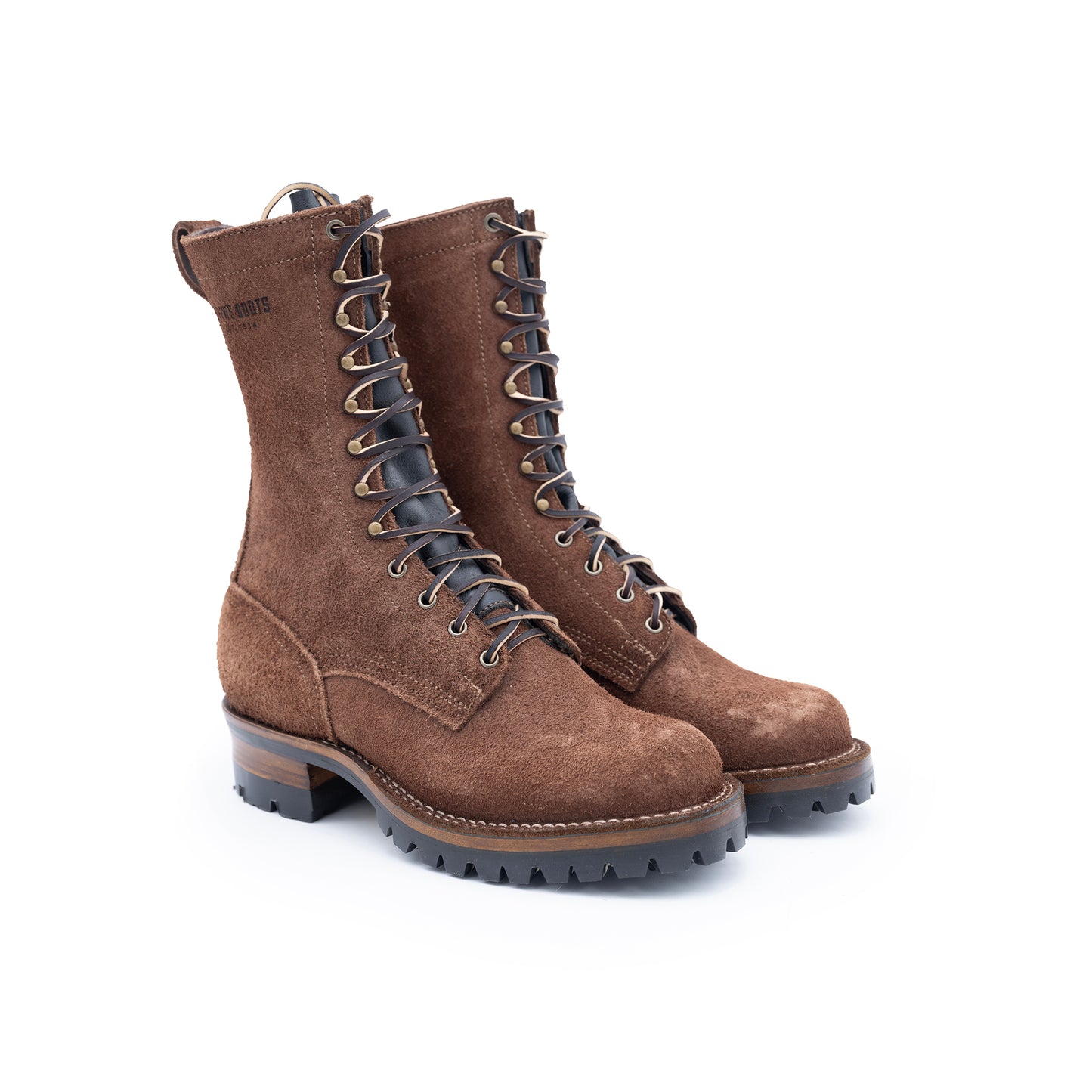
Drew's 10-Inch Logger in Brown Rough Out. View the boot.

A properly fitting logger boot should feel secure around your heel and instep while giving your toes enough room to move naturally. Your foot shouldn't slide excessively inside the boot, and you shouldn't have to tolerate sharp pressure or pinching while hoping the leather will eventually stretch.
Your toes should have enough space to move naturally without pressing against the front or sides of the boot. When standing, make sure your toes aren't cramped and that the widest part of your foot sits comfortably within the toe box. A good rule of thumb is a thumbs width from the end of the boot to your longest toe.
Drew's Logger Series uses an updated version of the traditional 55 last, with a toe box widened by 1/8 inch and added instep height designed to improve comfort and ease of entry. This allows your toes to splay during a long work day without them feeling too crammed.
Some slight heel movement can be normal in a new pair of structured leather boots. However, your heel shouldn't lift excessively or rub so much that it causes discomfort. As the leather insole gradually conforms to your foot, the fit can change. The goal is a secure, supportive feel—not a boot that's painfully tight or so loose that your foot moves around.
The instep is the upper part of your foot beneath the laces. A good fit should feel supportive without creating sharp pressure, numbness, or uncomfortable pinching. You should be able to lace the boots securely without leaving the laces excessively loose to relieve pressure.
The widest part of your foot should sit comfortably in the widest part of the boot. If the sides squeeze your foot, you may need a wider size. If your foot shifts from side to side, the boot may be too wide or too large.
The bottom line: A new logger boot may feel firm and structured, but it should not cause significant pain. Don't buy an incorrect size expecting break-in to fix it.
Drew's Logger Series generally runs large compared with typical sneaker sizing. Drew's published sizing recommendation is to start by sizing down half a size from your seated Brannock measurement or approximately one and a half sizes from your usual sneaker size.
| Your sizing reference | Drew's Logger starting point |
|---|---|
| Seated Brannock size 10D | Logger size 9.5D |
| Sneaker size 10D | Logger size 8.5D |
These examples are a starting point, not a guarantee of fit. Foot shape, width, instep height, sock thickness, and differences between shoe brands can all affect the final size. Your general sizing chart is also a useful comparison, but it won't be exact for every person or every boot brand.
If you wear a size 10 sneaker, Drew's recommendation suggests starting with an 8.5 logger. This is a useful shortcut if you don't have a Brannock measurement. However, sneaker sizing isn't standardized, and some people wear different sizes in running shoes, casual sneakers, and work boots.
A Brannock device measures foot length and width and can provide a more consistent starting point than sneaker size. For Drew's Logger Series, the published recommendation is to go down half a size from your seated Brannock size.
For the most reliable guidance, review the sizing notes on the exact product page before ordering.
Read Drew's Foot Measuring Guide →
Length is only part of the equation. Choosing the right width is just as important, especially if you spend long hours standing, walking, or working on uneven terrain. Drew's 10-Inch Logger listings offer D (Medium) and EE (Wide) width options, subject to availability.
D is standard men's medium width. It may work well if your foot is neither particularly narrow nor wide and the boot feels secure without squeezing the sides of your foot.
EE provides additional width for customers who need more room through the ball of the foot. If your toes feel cramped from side to side, or standard-width boots are regularly uncomfortable, consider trying a wide width.
Keep in mind that extra width doesn't solve every fit issue. A boot can be too narrow in one area but too loose in another, so a different length or fit may be necessary.
Men's and women's shoe sizing generally differs by approximately 1.5 sizes. For example, a women's size 8.5 is roughly equivalent to a men's size 7. Use this only as a starting point, because width and foot shape also affect fit. Check the sizes and widths available on the individual product page.
Once you have a starting size in mind, choose a leather finish and boot height that suits your preferences. Select a product below to see its current options and availability.
 Drew's 10-Inch Logger — Black Smooth A classic black smooth-leather look. |
 Drew's 10-Inch Logger — Brown Rough Out A rugged, textured brown leather finish. |
 Drew's 10-Inch Logger — Black Rough Out A black roughout option with a textured finish. |
 Drew's 8-Inch Logger — Brown Smooth A shorter logger option. View the product page for its current photos and details. |
Even with the right size, new leather logger boots can feel firm at first. Drew's Logger Series features a full-grain, vegetable-tanned leather insole designed to gradually conform to your foot. The updated last is also designed to improve fit and the break-in experience.

Leather boots are built from multiple components that work together. During break-in, the leather upper gradually flexes with wear, while the leather insole can begin to conform to the shape of your foot. That process takes time; it should never require tolerating sharp pain or a boot that is clearly the wrong size.

Try your new boots with the socks you'll normally wear on the job. Thicker work socks can change how much room you have inside the boot, so account for them from the start.
Wear your boots around the house or for short periods before committing to a full day of demanding work. Pay attention to pressure points, rubbing, heel movement, and any areas that feel too tight.
Adjust the laces so the boot feels secure around your instep and ankle without cutting off circulation or creating painful pressure. If one area feels uncomfortable, try adjusting lace tension before assuming the boot needs to stretch.
Wear the boots regularly for manageable periods and allow the leather insole to conform gradually. Avoid excessive heat, soaking the boots to soften them, or aggressive stretching methods that may damage the leather or boot structure.
Some initial firmness is normal, but sharp pain, numbness, persistent pinching, or severe rubbing aren't signs to ignore. If the fit feels fundamentally wrong, contact Drew's Boots for guidance rather than continuing to wear uncomfortable boots in the hope that they'll eventually fit.
Buying work boots online can feel like a gamble, especially when you're investing in a pair you'll depend on every day. If the sizing chart doesn't give you enough confidence, take a few minutes to review Drew's foot-measuring instructions.
Drew's recommends putting on the socks you plan to wear with your boots and having someone else trace both feet while seated and standing. The measuring guide also explains how to measure the ball, instep, and heel. Follow the full instructions on the page for the most useful results.
Read the Drew's Foot Measuring Guide →
You can also contact Drew's Boots with questions about a particular logger model before placing your order. Getting the right fit from the start can make your boots more comfortable and help you get the most from your investment.
The right logger boots should feel secure, supportive, and ready to work. Start with Drew's sizing recommendation, consider your foot width and shape, and allow for a gradual break-in period.
Whether you prefer black smooth leather, brown roughout, or a shorter logger style, Drew's Logger Collection offers options to explore.
Shop the Drew's Logger Collection →
Drew's published recommendation is to size down half a size from your seated Brannock size or approximately 1.5 sizes from your sneaker size. Treat this as a starting point and confirm the sizing notes on the product page.
Leather can soften and adapt with wear, and a leather insole may gradually conform to your foot. However, don't expect a boot to stretch enough to correct a major sizing problem.
They may feel firm and structured, but they shouldn't cause sharp pain, numbness, or severe pinching. Your toes need room to move, and the boot should feel supportive without squeezing your foot. For a proper fit, Drew's recommends a similar feeling to a firm handshake, snug, but not too tight.
D is standard men's medium width, while EE provides additional width. Your ideal choice depends on your foot shape and measurements, so use the fit of the actual boot as your guide.
There is no universal break-in timeline. It depends on the boot, your feet, and how often you wear it. Start with shorter wear periods and increase gradually while monitoring comfort. General break-in time depends on each individual and their awareness of how these boots are constructed. It can take anywhere from 20-100 hours of active wear before they are considered broken in.
Review Drew's model-specific sizing advice and consider your Brannock measurement, usual sneaker size, foot width, and sock thickness. If you're still uncertain, consult the foot-measuring guide or contact Drew's Boots before ordering.